2013/11/14

The VOC1 final session


Yesterday we had the voc1 final session. Two tasks were assigned to us, one individual work as a presentation of 'lesson plan', another as a group solution in a short time period with new group members (some are not new). 
I was a bit disappointed with myself for the time management of my presentation, to be honest, this has been always my problem. Hopefully, I could make improvement for this in all my work, not only this study.
It was really nice to have some new members to work with, it was a better way to get along with all schoolmates than just sticking to a fixed group.
The group task was 'Sustainable development (SD): what are the key themes when creating a lesson plan'? In a short time period, we worked out a proposal:

The contents for SD lesson planning:
  • 4 different ares of SD should be clear
  • The concrete examples of all the 4 themes in practical field
  • Rules, regulations, contracts of SD (tools such as Green office, ISO140001 etc.)

Examples of SD at Oulu UAS:
  • Ecological: Reducing the carbon footprint (preventing negative environmental impacts: decreasing consumption of energy, materials and water)
  • Economic: Eco-efficiency (balancing aims and resources, life cycle thinking, recycling)
  • Social goal: Work and study wellbeing (strengthening competence, indulgence, caring, equality and security)
  • Cultural: Enhancing multiculturalism (dialogue between educational and professional fields, sustaining and advancing provincial culture)
The pedagogical method for SD lesson planning:
  • Interview and research in companies
  • Reporting own experiences of SD integrated with the relevant courses
  • Experiments in certain courses to get a deep understanding about the impact of SD
  • Setting up rules for daily work interns of saving resources, e.g. using computers instead of printing out materials or homework, recycling papers etc.
  • Reading and checking SD reports of companies
  • Having training for students to understand SD
  • Proving training for stuff and to build up a caring environment atmosphere at school
  • Building networks regionally,  national wide, and globally to cooperate and share experiences 


Reference:


2013/11/11

How do I use technology in my field of pedagogy?


Nowadays, learning new technology for both of studying and teaching has been becoming more and more important. It is not technology itself as a new trendy word, rather it is an important tool for everyone to learn and teach more effectively and efficiently. The new technology can be used for both of classroom teaching and online teaching, well, of course, then the tools chosen to use for each are different based on the characteristics and situations. I started to gain more knowledge in online teaching from iVET programme. For myself, I have realized the necessity and importance to be able to use the online resources for both of learning and teaching purposes, however, my knowledge at the moment is quite limited and I will be working on it.
Padlet wall is very good and welcomed for both teaching and learning. Everyone is so interested in and active to express their opinions.
Google.docs is very good in group work, e.g. everyone can brainstorm in one document and there is no need to email files back and forth. Some people said it is also very good for teaching, but I haven’t had the experience in it.
Moodle is a free software e-learning platform with user base over 83,008 since 2013. It is used to create online courses with a focus on interaction and collaborative construction of content.
http://news.google.com  -- aggregates articles from thousands of news sources worldwide.
http://www.apple.com/education/ipad/resources/ --- helpful resources and apps for teachers and professionals.
Blogger allows students and teachers to publish their experiences and reflections chronologically, giving insight into their thoughts and practices.
‘Adobe - connect’ and ‘gotomeeting.com’ are also good e-learning tools to use.

The online resources mentioned above are for all types of e-leaning, not necessarily only teaching in English. 


2013/11/09

Methods of assessment can be used and in their context

The purpose of the assessment is to support students’ effort to reach the desired, expected outcome, and at same time find out the level of achievement. When planning the assessment, we should know the specific outcome we want, and thus the methods that those outcomes are supposed to be achieved with.
Assessment methods of learning: the chosen assessment method is a central factor behind study motivation, attitude towards studying and the achieved learning outcomes (Scouller 1996, 3; Ramsden 1992, 67).

  • Participants teach – Let the students teach other, but monitored and guided by the teacher. Teaching can be done by individuals, pairs or groups. The assessment focus on the quality and knowledge level that they are able to present, explain and argue.
  • Assignment – It can include doing, reading, retrieval of information, laboratory assignments or planning, and it can be done individually or in groups. Focusing the assessment on an assignment often supports studying already during the course. A deep approach to learning can be achieved through the students’ independent information processing. It is key to motivate the students to commit to the assignment and provide support.
  • Mind map - A tree-like graphical presentation created by the student that has keywords and connections between subjects. The assessment may concentrate on how diversely and richly the matter is laid out and what the mind map includes and lacks. It can be connected to other assessment methods.
  • Demonstration event- Students present a thing or a system that they have created during an assignment or a project. E.g. it can be a video, a slideshow, a drawing, a poster or a verbal presentation. The assessment can be focused on the ability to describe and present in addition to the quality of the work. The demonstration event can be connected with another assessment method, e.g. with the written assessment of a project or an assignment.
  • Written assignment – The students need to apply their knowledge and learned theory to the assignment which also bring forth the students’ own views and opinions about the studied subjects. Written assignments include reports, essays, summaries, commentaries, abstracts and synopses. The assessment criteria are very important to direct the students’ writing and define the form and quality of the end result. Assessment can also focus on the students’ ability to analyse as well as concentrate on the information created by the students themselves and on their ability to refine the information. The challenge is the creation of instructions and assessment criteria that are good enough for the assignment.
  • Portfolio, development portfolio – Students collect their achievements in a portfolio to present their learning. A portfolio can include all of the student’s output (work portfolio) or just a sample of them (sample portfolio). The structure of the portfolio may be strictly defined or chosen freely by the students. The assessment can focus on the outputs included in it, also the student’s verbal or written presentation and evaluation of the portfolio and his/her development during its creation. The students should be made aware of the assessment criteria for the portfolio, as well. This method can be a very motivating tool for students to do the independent work, but also requires good instructions and supporting during the process.
  • Project work – The assessment of project work may focus on the end result, as well as on the division of work, supervision of work, project plan and its execution, working methods, scheduling, budgeting and reporting. It is good way to promote a deep approach to learning. The challenge is how to let all the students work well in groups.
  • Research project - Work on real problems by participating in starting or already running research projects. The assessment may focus on the research plan, actions during the research and/or the results of the research. It is important to assess the students not only the results, but also the nature and quality of their actions during the project. Assessment should also reward the students for noticing wrong decisions and utilising group work. This type of assessment promotes both the success of the project and the development of the students. The challenges are to find/create good projects and research problems, guiding the students’ actions during the projects and the assessment of projects.
  • Learning diary - A document written by the student, which includes learned subjects, questions, subjects of lectures, plans, problem points and other contemplation. The assessment should pay attention to the student’s analysis of his/her own development, and his/her ability to bring forth questions and seek answers to things that the student has not completely understood, among other things. A learning diary may also be provided as an alternative assessment method for an examination. If a learning diary is written during the course, assessment should be based on it. There is no need for a separate examination in addition to a learning diary. students should be given instructions on and guided with the writing of a learning diary and checking the learning diaries may require additional workload for teachers.
  • Discussion and interactive events - Refer to meetings between the person carrying out the assessing and the students, where feedback is given and the subject matter of the course is discussed. The discussions can be carried out privately or in small groups. The goal of assessment is to give feedback on the students’ work and to encourage the students to direct their studies to enable the achievement of the learning outcomes. With interaction, the students can think about things that they would not have thought otherwise. It can also be used to solve problems and difficult matters. It helps the teacher see the views of the students better. Discussions are usually most successful in small groups and demand good communication skills in a trusting atmosphere to succeed.
  • Different types of examinations (is still one of the most widely used assessment methods) - ‘keep in mind: examination should only include tasks and questions, which the students have already exercised during the course’
o   Pretest – helps the students form their own opinions on the subject matter of the course. The course can also be started more quickly. The challenge is how to emphasise it in relation to the other forms of assessment of the course.
o   Iterative examination – to give the students feedback on the test questions, thus direct their studying. Particularly it may enable individual progress and support the development of the students who advance more slowly.
o   Traditional examination – the central idea is that there are certain things that the students should learn. The students answer the test questions based on their memory and knowledge. It is easy to implement, but does not give an objective picture of the students’ knowledge.
o   Verbal examination – makes it possible for the teacher to ask more specific questions. It is possible to know the students’ actual understanding and knowledge through asking more specific questions.
o   Home examination – has strong similarities to writing assignments and other assignments. Students do not have to memorise things, but they can instead use books to support their memory and learning. The assessment is focused on the knowledge and ability to solve real life problem.
o   Internet examination – enables the students living in various places completing the examination at the same time. The challenge is how to create an examination that truly measures the desired thing and how to monitor that the students complete the examination themselves.
o   Book dialogue examination - students write an essay or a report based on books chosen either by the teacher or by themselves. Examination should be focused on the students’ ability to discuss the topics and the problems that they have faced in addition to the quality and contents of their answers. This method gives students time to prepare and motivate them to analyse the information they received. The challenges are the workload for teachers and the possible nerves of students which may cause problem for discussions.
o   Lecture dialogue examination – creating an output that includes questioning, critique or discussing questions by individual or group students. In the examination, output is given to the teacher, after which all of the students present their work and its problems or questions one after another. Then the student himself/herself, the teacher and the rest of the participating students comment on the topic, the questions, the problems, the presentation and the output. Examination should concentrate on the questions and problems raised by the students as well as their output itself. This method is connected with the development purpose of assessment. The challenge is the time that it takes to arrange the assessment situations.
o   Portfolio examination – the teacher asks the students questions or has them do exercises based on the portfolios that they have created. The assessment purposes can include giving feedback, development or evaluation.
o   Learning diary examination – ask the students questions or has them do exercises based on the learning diaries that they have written. The assessment purposes can include giving feedback, development or evaluation.
o  Open book examination - it decreases the significance of memorising for the examination. It is better suited for a deep approach to learning than a traditional examination.
o   Quick reports – can be used after a work phase has ended, at the end of a lecture or an assignment. Based on the quick reports, the students can be given either verbal or written feedback.
o   Presentation examination – produce a poster presentation about a topic, problem or a project. A seminar-like common event can be arranged to present all the poster presentations. For the teacher, it is a quick way to get a picture of the completed assignments or projects.
o   Drama examination – students will act out individually or as a group a phenomenon that is given to them beforehand or planned in the examination situation. Some examples of drama situations: Solving crisis situations between a superior and a subordinate, communication problems between an expert and a customer and the relationship between a patient and a doctor. The assessment is challenging and difficult to create common assessment criteria and to compare the performances.
o   PBL examination – Students are given a problem that they begin to solve by discussing it together. It can be completely as group work, or may be combined with an independent phase, during which all students create their own answers. It can also be started by having the students solve the problem independently and then discussing it in a group. The assessment can be focused on the outputs or actions of individual students or of the group. The examination develops the students’ group work skills and promotes the development of their argumentation and justification skills.
o   Multiple-choice examination – ease and usually no confusion in the interpretation of the answers. However, the creation of a good multiple choice examination is difficult to measure the learning instead of memorising. The evaluation of learning is also challenging, because the choice could be made by guessing or by eliminating impossible answer options. A multiple choice examination can be developed by requiring the students to justify their answers, which forces them to think about the options more deeply, which helps to avoid many of the problems of a traditional multiple choice examination.


Reference:
Olli Hyppönen and Satu Lindén, Handbook for teachers - Course structures, Teaching methods and assessment, Publications of the Teaching and Learning Development Unit of the Helsinki University of Technology 5/2009


2013/11/02

How can we meet the demand of Equality in teaching?

What is equality?
ensuring individuals or groups of individuals are treated fairly and equally and no less favourably, specific to their needs, including areas of race, gender, disability, religion or belief, sexual orientation and age.

How to achieve quality in teaching and classroom?
  • An awareness and appreciation of diversity, including reference to race, culture, religion, gender, age, disability and sexuality.
  • Inclusive teaching, which takes account of the diverse, learning needs, styles and preferences of learners.
  • Responsive teaching, which aims to manage the learning experience in a way, which empowers and validates the diverse perspectives of learners.
  • Anti-discriminatory teaching, which teaches learners about their rights and responsibilities to each other.
  • Attitudinal teaching, which fosters understanding of how stereotyped attitudes and prejudiced thinking damage relationships, hinder communication and are therefore bad for education and bad for business.
  • Diversity teaching, which acknowledges and celebrates the contributions of people of all backgrounds, ages, cultures and religions to human progress in all fields.
Reference:


How does a vocational teacher deal with the demands of sustainability?


What does the term ”sustainable development” mean?

Sustainable development refers to continuing and controlled changes in society at the global, regional and local levels. The goal is to ensure a better quality of life for the present and future generations. It can broadly put into the three aspects:
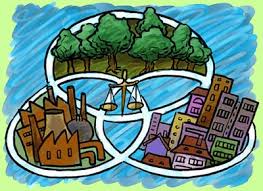
·         ecological,
·         economic,
·         social and cultural sustainability.
Green economy that promotes employment, sustainable management of natural resources, and environmental protection and human development

In the past decades, Finland has set up the programme of The National Strategy for Sustainable Development "Towards sustainable choices”. Finland has taken an active role to promote corporate responsibility and international legislation to improve the materialisation of human rights in global product chains as well as to ease the stress on the environment. In terms of ecological sustainability, the primary goals are to reduce the use of nonrenewable resources, to preserve nature’s generative capacity and ecological values and to generally improve the condition of the environment. In striving to achieve social and cultural sustainability, the programme is designed to equip society with the skills and knowledge required for meeting the challenges of sustainable development, thereby also generally improving social wellbeing.
•Growing population
•Poverty
•Environmental degradation
•Democracy, human rights and peace
•Development

How to direct/govern/teach sustainable development in schools?

NATIONAL LEVEL:
SUSTAINABLE DEVELOPMENT IN LEGISLATION - every individual is responsible for nature and its biodiversity, environment and cultural heritage.
BASIC AND UPPER SECONDARY EDUCATION- The largest amount of material relating to sustainable development is included in natural sciences, but it is also treated in connection with home economics, art and crafts, humanities and languages. Vocational institutes curricula, which also include environmental know-how in vocational competence. The aims of environmental education are an awareness of the necessity of sustainable development, positive attitudes towards working for and sufficient knowledge and expertise to act in keeping with sustainable development, and skills needed to pursue a sustainable way of life. Even more emphasis has placed on teachers’ guides, various learning materials and in-service training for teachers. Teachers are encouraged to work in co-operation with various experts. Information about nature schools, and other interesting places for visits, projects and programmes will be disseminated more effectively than is done presently.
CREATING NETWORKS
Setting criteria - schools can evaluate and develop management of environmental matters. The aim of the criteria and the environmental programme for schools to ensure that the principles of sustainable development are included in all school activities, such as instruction, building maintenance, deliveries and transport, material usage, functions of the school kitchen, and administration of safety matters.

LOCAL LEVEL
CURRICULA - municipalities give schools quite a lot of power to decide but municipalities make centralized decisions concerning language programmes, distribution of lessons, and organisation of special education. In the majority of schools, curricula have been made in cooperation with the teachers of a school and one or more cooperative partners. In most cases, cooperation has also taken place with pupils’ parents. Another common way is to cooperate with other schools and teachers in the municipality. Municipality authorities need to approve of the individual school curricula.

SCHOOL LEVEL
EE/ESD DURING REGULAR SCHOOL HOURS -
In primary schools, environmental and natural studies are the subject in which to best put sustainable development into practice. In secondary school, however, biology, geography and home economics are the subjects with most material for dealing with the topic of sustainable development. Upper secondary schools mention biology, geography and chemistry as subjects putting sustainable development well into practice.
Basic education in vocational institutions has sustainable development. Tthe fields putting sustainable development into practice most were considered to be the field of natural resources, tourism and travel industry, food and catering industry, economics, social care, and health care, and subjects of the energy economy, environmental education and environmental knowledge, social awareness and knowledge of working life, vocational work, and technology. Periods of practical work are the subject entities which implement sustainable development best.
EE/ESD AFTER SCHOOL ACTIVITIES - Various organisations cooperate with schools in the area of environmental education. Organisations can participate in planning short courses, projects, special theme days, competitions, work parties, and camps on sustainable development. These can be conducted during a school day or after regular school hours.
CONTENTS OF EE/ESD - The topic of ecological sustainability is mainly associated with the syllabi of the natural sciences. Elements of economic, cultural and social sustainability are to be found in almost all subjects. These types of sustainable development are central, for example, when dealing with the topics of population growth, urbanisation, internationalization and family education, graphic arts, and personal and social education. Short- and long-term study units relating to environmental education are organised in all types of educational institutions. Themes for these study units include among other things such as, recycling and refuse disposal, immediate surroundings, traffic, and endangered species of animals.
Local, regional, national, or international projects and programmes are a popular way of carrying out projects relating to environmental education and sustainable development. Many of these projects focus on doing research on the state of environment, and on comparing the results. In some projects, schools draw up their own environmental programme, and plan ways of making the transition to an ecological lifestyle. In cooperation with museums and schools research is done on the cultural heritage of an area.
The objective of many projects is to familiarise students with their surroundings, and to take a stand on plans of its development. Some projects include course planning, or revision of an entire curriculum. The aim of leading a life according to the principles of sustainable development manifests itself most clearly in practising sorting and rubbish collection. Conservation of resources and recycling are also important forms of putting sustainable development into practice. Ecological reforms in school kitchens and meals, keeping a watch on the use of water and energy, ecological and economic solutions in school purchases, environmentally friendly detergents, maintaining safety and pleasantness of surroundings, and traffic arrangements are also some of the commonly taken practical measures for sustainable development.
METHODS AND ORGANISATION OF EE/ESD - Study methods naturally depend on the topics which are being dealt with. Problem-solving processes, cooperative learning, and participation in decision-making have become more common in environmental projects. action programme for sustainable development.
  • A team takes responsibility for the organisation of sustainable developmenT.
  • Teams or appointed persons take care of contacts outside school, events and many practical   matters. They have an important role in developing the curriculum, courses and learning. Headmasters lead, plan, delegate and take care of contacts to other organisations.
  • Teachers plan, teach and guide. Students plan, study and participate in many practical tasks   alongside staff.
  • Cooperation between staff-members in school manifests itself in discussing, planning and     integrating subjects.

STEPS TAKEN TO MAKE SCHOOLS MORE ENVIRONMENTALLY FRIENDLY – 1) Schools plan new interdisciplinary courses and extra optional courses concerning EE/ESD; 2) participate in projects and to join environmental networks. Network cooperation gives schools courage and ideas. Cooperation with local environmental experts, organisations and businesses offers plenty of opportunities for both developing teaching, and for changing everyday practices.  Organising recycling is normally the first step in changing day-to-day practices. Saving material, energy and water, and taking the environmental aspect into account in planning purchases is the second step in changing everyday practices of schools in more ecological direction. This stage is often reached as a result of cooperation between schools and local authorities. 3) The third step is revising curricula so that sustainable development is included in the contents of many or all subjects. Standardising teaching and everyday practices is considered important. A school can draw up its own environmental programme, and a method for evaluating it. An environmental programme of a school can be included in the school’s quality standard or be part of a local agenda.
SUPPORT - changes in schools depend on the attitudes of the staff.
  • Positive attitudes, and the awareness of the necessity of sustainable development are starting points for changes. The official national-level support in the form of framework curricula and various action programmes, on the other hand, are important for a change in attitudes.
  • In-service training
  • Material available for environmental education e.g. text books, exercise books, additional teaching material, bulletins, research reports, databases, study material on the Internet, and information in the media
  • Different network and Partership


In various fields of work, what challenges are there in sustainable development (with vocational education in mind)?

  • The lack of finances and resources to be the greatest obstacle for the implementation of sustainable development and 
  • A lack of time was said to be the second most common obstacle (National Board of Education).
  • Many reasons relating to attitudes were also felt to be impediments for implementing sustainable development.
  • A lack of information and cooperational skills, traditions, bureaucracy.
  • Sustainable development competes with other important issues, and its contents do not easily blend into the contents of school syllabi.
  • Ecological sustainability has established its position especially in natural sciences. Education concerning a change in values and lifestyle, or in society and production does not have as established a place in school curricula or contents.
  • Lack of support and exchange of experiences. 


Assessment of teaching


The assessment of teaching is aimed to help the teacher evaluate and increase the teaching quality in order to support the improvement and development of teaching. Good teaching includes the selection of teaching methods, but also how to implement the teaching.

  • External assessment: an external actor assesses individual courses, modules or the whole curriculum. For example, the Finnish Higher Education Evaluation Council (http://www.kka.fi) carries out external assessments. Assessment services can also be purchased. This method of assessment can be more objective and extensive than an internal assessment. But it is more expensive and challenging to conduct and the outcomes of the external assessment may not be relevant to the issues concerned.
  • Peer teacher assessment: the assessment is conducted by another teacher. The assessment is significantly influenced by the teacher’s pedagogic know-how, knowledge of the taught field and ability to assess. The peer teacher can notice something which the teacher him/herself may not notice to improve the teaching and also may bring a broad view for the development of the course. But the ability to make a valuable assessment is challenging by the peer teacher.
  • Own perceptions: assessment is done by observing his/her own teaching and the actions of students during the course, or combined with other assessment methods. The teacher should write down the observations in order to develop his/her teaching. This method is an effective way to assess and develop the teacher’s work, and does not cause extra work to the teacher. The challenge of perception is the limitation and difficulty to make on our own work.
  • Self-assessment: the students and/or the teacher assess their actions, learning or teaching independently. The difficulty is how to assess oneself without distort results.
  • Discussions with students: the teacher has discussions with the students during the course to gather assessment information. Thus the teacher is able to have the information about motivation, thinking and study progress and difficulties of the students. Based on the information gathered, the teacher is able to assess his/her work and modify accordingly. The challenges are how much information is needed, how many students need to discuss, and whether the information is justified and useful?
  • Questions for students: the teacher asks students questions about the course. The questions are the things which the teacher wants to know the opinions of students. The challenge is how the questions would be useful and valuable for the improvement and development of the teaching.
  • Questionnaires: the teacher creates a questionnaire that concentrates the questions related to the development of the course. A questionnaire can get answers from all students, the extent of a phenomenon and views can be found out with it, and if the same questionnaire is for different classes, the answers of various groups can be compared. The challenge is that what questions are the right ones and also the form of the questions. On the other hand, how we are able to know the causes behind, shall we also ask the reasons from students and how?
  • Interviews: the assessment information is collected through interviewing a sample of the random or selected group. It is good at the point that the teacher can get close contacts with students, knowing the particular issues which the teacher wants, and it can be flexible to modify or adjust the questions purposely; however, it is also a challenge in terms of how the teacher is able to get the true opinions from the interviewees.  
  • Work group: the teacher organises a group from the students to produce information related to the development of the course and give feedback. The group can meet weekly or monthly in connection with lectures. The good point is that the students can plan an important role in the development of the course, thus make them more motivated and committed. The challenge is how to form the group and who are the members?
  • Student outputs: such as exams, project works, reports, essays etc. can be used as basis for teaching assessment. Not for the grades, but analysis of their content, the teacher is able to know the progress of the teaching, what has to do next. This method is able to let the teacher know that what the students have learned and what are their shortcomings etc. However, the further step is needed to know what the causes for that. 

What is expected of vocational teacher and challenges?
•More focus on co-operation with working life and society
•Continuous updating of skills and competences of teachers
•Increased role of workplace trainers
•Challenges for teacher training and policy-makers


Reference:
Olli Hyppönen and Satu Lindén, Handbook for teachers - Course Structures, teaching methods and assessment, Publications of the Teaching and Learning Development Unit of the Helsinki University of Technology 5/2009


VET Teachers and Trainers in Finland Publications of the Ministry of Education, Finland 2006:41